

Sparky jumped
times
before he retired.
Good job, Sparky!
KING OF THE MOON
A Novel of Baja California
Amazon Kindle Book $2.99
FISH PICTURES
Fish Species From Mexico
MEXICO TRAVEL
FISHING LOCATIONS
MEXICO FISHING
Report Weekly Archives

THE UNFORGETTABLE
SEA OF CORTEZ
Baja's Golden Age
Limited Edition
Second Printing
THE BAJA CATCH
Classic Baja Fishing
Guidebook, More Than
20 Years In Print!
Pacific Cutlassfish
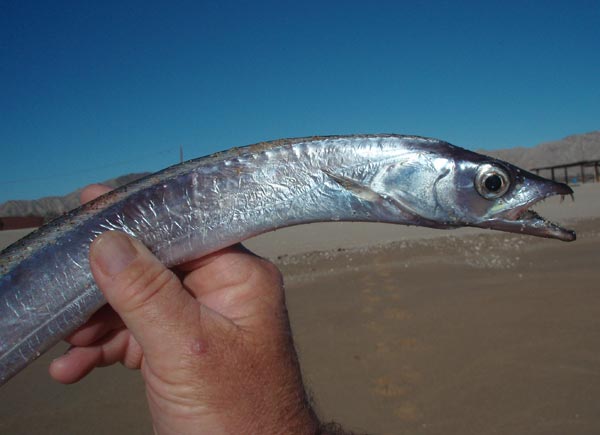
Pacific Cutlassfish, Trichiurus nitens: Found on the beach at San Felipe, Baja California, Mexico. Photo courtesy of Roger Love.
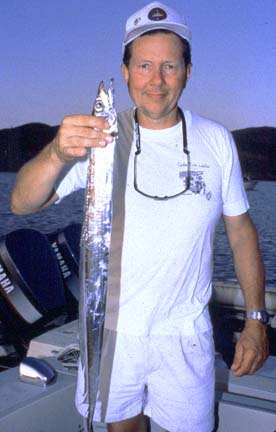
Pacific Cutlassfish, Trichiurus nitens: Mike Bales with a Pacific Cutlassfish caught during a fishing trip at Estanque, Isla Angel de la Guarda, Midriff Islands, Sea of Cortez, near Bahia de los Angeles (L.A. Bay), Baja California, water temperature 80 degrees. It hit a Luhr Jensen Stinger on the surface so hard, the lure went into its mouth and came out through its gill. Description and photos courtesy Gene Kira.
Mexico Fishing Home Page < Fish Photo List < Pacific Cutlassfish
Copyright ©