

Sparky jumped
times
before he retired.
Good job, Sparky!

KING OF THE MOON
A Novel of Baja California
Amazon Kindle Book $2.99
FISH PICTURES
Fish Species From Mexico
MEXICO TRAVEL
FISHING LOCATIONS
MEXICO FISHING
Report Weekly Archives

THE UNFORGETTABLE
SEA OF CORTEZ
Baja's Golden Age
Limited Edition
Second Printing
THE BAJA CATCH
Classic Baja Fishing
Guidebook, More Than
20 Years In Print!
Black Snook
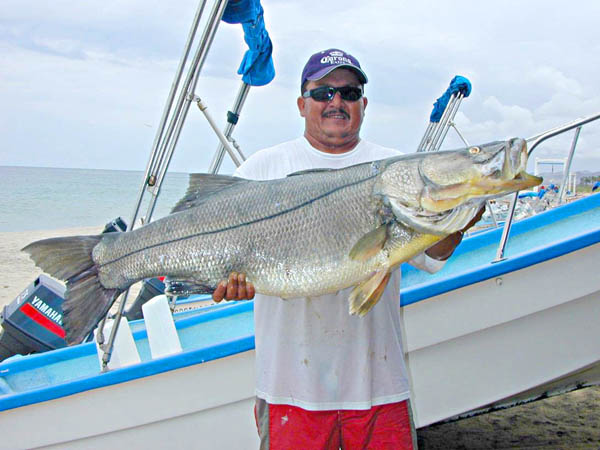
Black Snook, Centropomus nigrescens: This 51.5 pound Black Snook was caught during fishing in August 2003 by La Playita panguero Chopa. It was hooked on a small croaker, off the beach near San Jose del Cabo (Los Cabos), Baja California Sur, Mexico. Description and photo courtesy Eric Brictson.
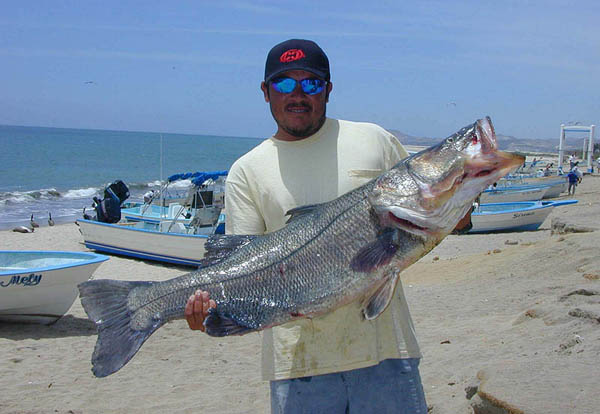
Black Snook, Centropomus nigrescens: In April 2003, this 40-pound Black Snook hit a sardina near the beach for Capt. Jesus of Gordo Banks Pangas, just off the boca of San Jose del Cabo, Baja California Sur, Mexico. Several other snook averaging about 30 pounds were also caught. Description and photo courtesy Eric Brictson.
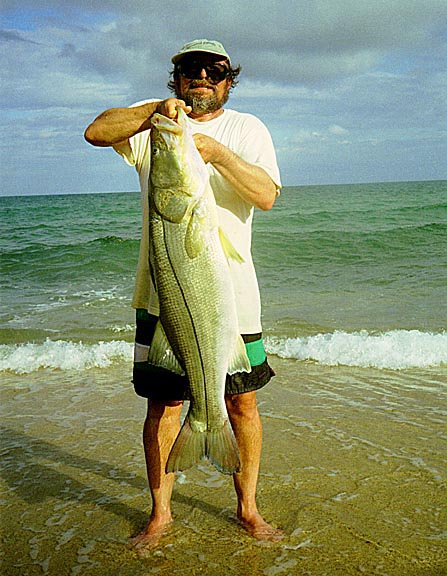
Black Snook, Centropomus nigrescens: A large Black Snook caught while fishing between La Ribera and Punta Colorada, East Cape, Baja California Sur, Mexico, on a very rainy day, November 1, 1997. Live mullet was used for bait in the surf. The angler is Richard Spinner. Photo courtesy Richard Spinner.
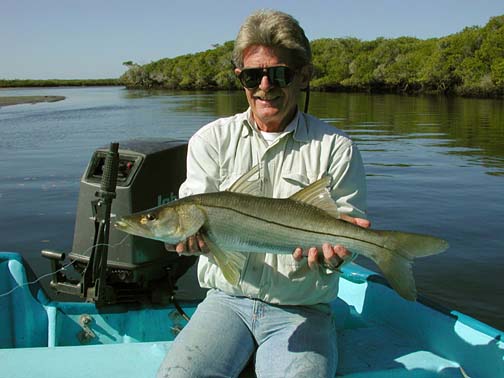
Black Snook, Centropomus nigrescens: A Black Snook caught on fly fishing tackle at Magdalena Bay, Baja California Sur, Mexico, by Gary Graham, Baja On The Fly. Photo courtesy Baja On The Fly.
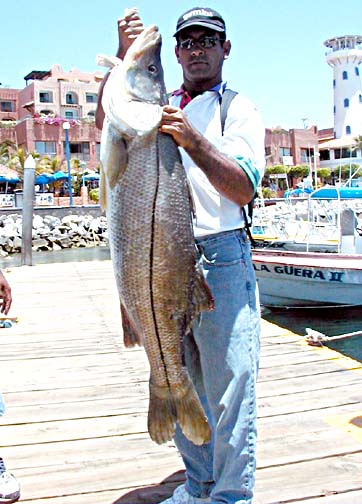
Black Snook, Centropomus nigrescens: Photo courtesy Tracy Ehrenberg, Pisces Fleet, Cabo San Lucas, Baja California Sur, Mexico.
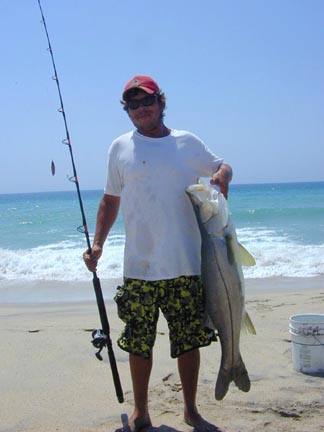
Black Snook, Centropomus nigrescens: A 23-pound Black Snook caught August 2002 at La Playita Beach, San Jose del Cabo, Baja California Sur, Mexico. Photo courtesy Eric Brictson, Gordo Banks Pangas.
Mexico Fishing Home Page < Fish Photo List < Black Snook
Copyright ©