Brown Cat Shark Photos and Species Information for Fish Caught in Mexico
See current, on-the-spot sportfishing reports and photographs of fish caught at Mexico's top vacation spots in this week's edition of
"Mexico Fishing News" and see hundreds of other fish pictures and species information by clicking here for our main Fish Photo List.


Brown Cat Shark Logo

Brown Cat Shark
Pejegato Marrón
(Apristurus brunneus)

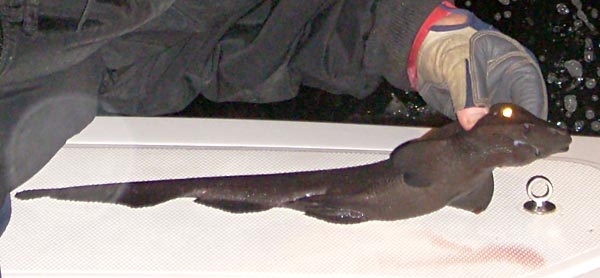
Fish Identification Photos: Brown Cat Shark, Apristurus brunneus: The Brown Cat Shark is a little-known deepwater shark that is found demersal (on the bottom) from 100 feet to 3,000 feet deep over muddy or sandy bottoms. The Brown Cat Shark has a broad, rounded, flattened snout and a uniform dark brown coloration with white fin tips.

The two dorsal fins of the Brown Cat Shark are set well back in the body near the base of the tail. The Brown Cat Shark reaches a maximum length of 27 inches. It feeds on shrimps, squids, and small fishes, and in turn is preyed upon by larger sharks and large fishes.

The Brown Cat Shark is oviparous with young born from sea-deposited eggs. It is found in the Eastern Pacific from British Columbia to Magdalena Bay, southern Baja California, Mexico.

There is no current interest in this species from either a commercial or a recreational angler perspective. This species has not been studied by the scientific community due to its rarity and it merits additional study.

The Brown Cat Shark is a member of the Scyuorhinidae family, which are the catsharks and known in Mexico as pejegatos. There at least 15 genera and over 100 species from this family which is the largest shark family. They tend to be small, usually less then 3 feet in length, and harmless to humans. Most are bottom dwellers found in tropical waters from intertidal zones to depths of more than 6,000 feet. Very little is known about their lifestyles. Due to enlarged gills they are able to survive very low oxygen levels, high temperatures, and high salinity that cannot be tolerated by most other fishes. They have cylindrical bodies that taper at both ends. They have elongated, catlike eyes situated high on the sides of the head which gives rise to their names. The first of two dorsal fins is opposite the pelvic fin. Greater than 90 percent of the catsharks reproduce via eggs which are released to the sea bottom in “mermaid purses” which can take up to one year to hatch. The catsharks are slow moving and non-migratory, with keen senses of hearing, taste and smell that help them to find food. They are considered to be vulnerable due to overfishing and, with slow growth and long periods to reach maturity, replenishment of stocks is of concern.

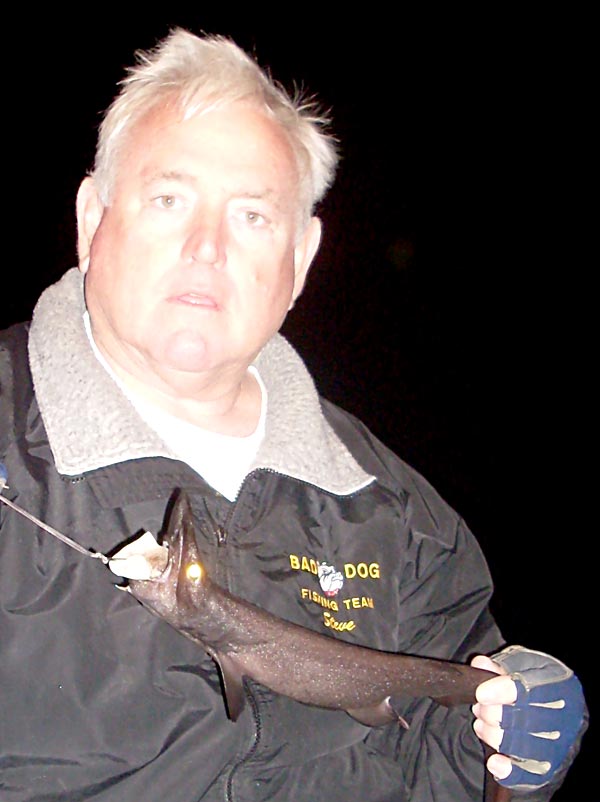
 Brown Cat Shark Photo 1

 Brown Cat Shark Photo 2

Brown Cat Shark, Apristurus brunneus: Caught on a vermilion rockfish bait at Ensenada, Baja California, Mexico, December 2007, while fishing 3,000 feet deep at the Banda Bank. Description courtesy of John Snow. Photos courtesy of Steve Ross.

MEXICO FISHING NEWS  <  FISH PHOTO LIST  <  BROWN CAT SHARK